
.png)
AEO For Sentiment Analysis: How AI Understands Your Brand

As Large Language Models (LLMs) get smarter, they’re also getting more accurate at doing something most brands still don’t fully understand: forming a clear point of view instead of simply summarizing what a brand does.
This is one of AEO’s biggest mindset shifts. And it’s why sentiment analysis has quietly become one of the most important signals in how brands are evaluated, compared, and shortlisted before a human even visits a website.
That’s one of the main reasons Edgar Allan partnered with Profound: to understand when brands appear in AI-generated answers, and how they’re being characterized when they do.
It’s always been about the story; it’s just that AI search has now pulled it into focus.
What sentiment analysis means in an AI-first world
Traditionally, sentiment analysis has been treated as a metric for brands to measure their reputation, using positive versus negative mentions, often tied to social listening or review platforms.
In an AEO context, however, sentiment analysis is better understood as perception analysis.
It measures the qualities, tradeoffs, and themes that AI tools surface when they describe, compare, or recommend a brand based on everything they can see about it online.
In other words, sentiment analysis shows you:
- How AI models understand your brand.
- Which attributes they emphasize?
- Where doubt, hesitation, or objection shows up.
This matters because users are now relying on tools like ChatGPT to evaluate options, compare vendors, and pressure-test decisions before ever setting foot on a brand’s website. Within search engines, users rely on Gemini and AI overviews about a topic or brand to do the same thing.
But the language those tools use to help users form their own opinions doesn’t come from nowhere. It’s synthesized from hundreds of online sources and weighted by trust, consistency, and clarity.
That synthesis is what users ultimately trust. Sentiment is the signal that reveals whether your brand is working hard for you or quietly working against you.
Why sentiment analysis (and a brand with a clear POV) are AEO foundations and not nice-to-haves
Successful AEO hinges on interpretation. Being mentioned is easy. Being understood correctly is harder.
When AI systems generate responses, they’re not ranking pages like we’ve become accustomed to. They’re constructing narratives about brands that include all kinds of information, like implied strengths, weaknesses, and positioning. Sentiment analysis collects the positives, which, if your position and unique POV are strong, should read like a list of reasons to believe in your brand.
Sentiment analysis also reveals where those narratives are unclear or drifting, however, which is especially important in the middle of the buyer’s journey, when prospects are asking questions like:
- Are this company’s products or services expensive?
- Is this brand reliable?
- Is this the right fit for me?
That’s a cue to disambiguate or directly combat an untruth about your company. Why? If negative sentiment shows up repeatedly around a theme, that theme becomes an objection, whether your site ever mentions it or not.
Control the narrative, don't just join it.
Understanding how LLMs characterize your brand is the first step toward a functional AEO strategy. If you're ready to see how your brand maps out, let’s start a conversation.
How Edgar Allan uses Profound for sentiment analysis
Profound works by running sentiment-focused prompts through AI, the same kinds of evaluative questions real prospects ask.
Using these prompts and themes, we can see:
- Which appear most frequently.
- Whether they are framed positively or negatively.
- Which sources are being cited to support them
Positive sentiment is generally treated as a confirmation signal. The real work begins with negative sentiment, because those themes tend to escalate.
Left unaddressed, they harden into objections that surface in sales conversations or quietly simmer, removing a brand from consideration altogether. Check out how you can fix the issue of misrepresentation of your brand in answer engines with this guide.
A real example: Edgar Allan’s own sentiment profile
We’ve used the same analysis on ourselves as we would for any brand we work with.
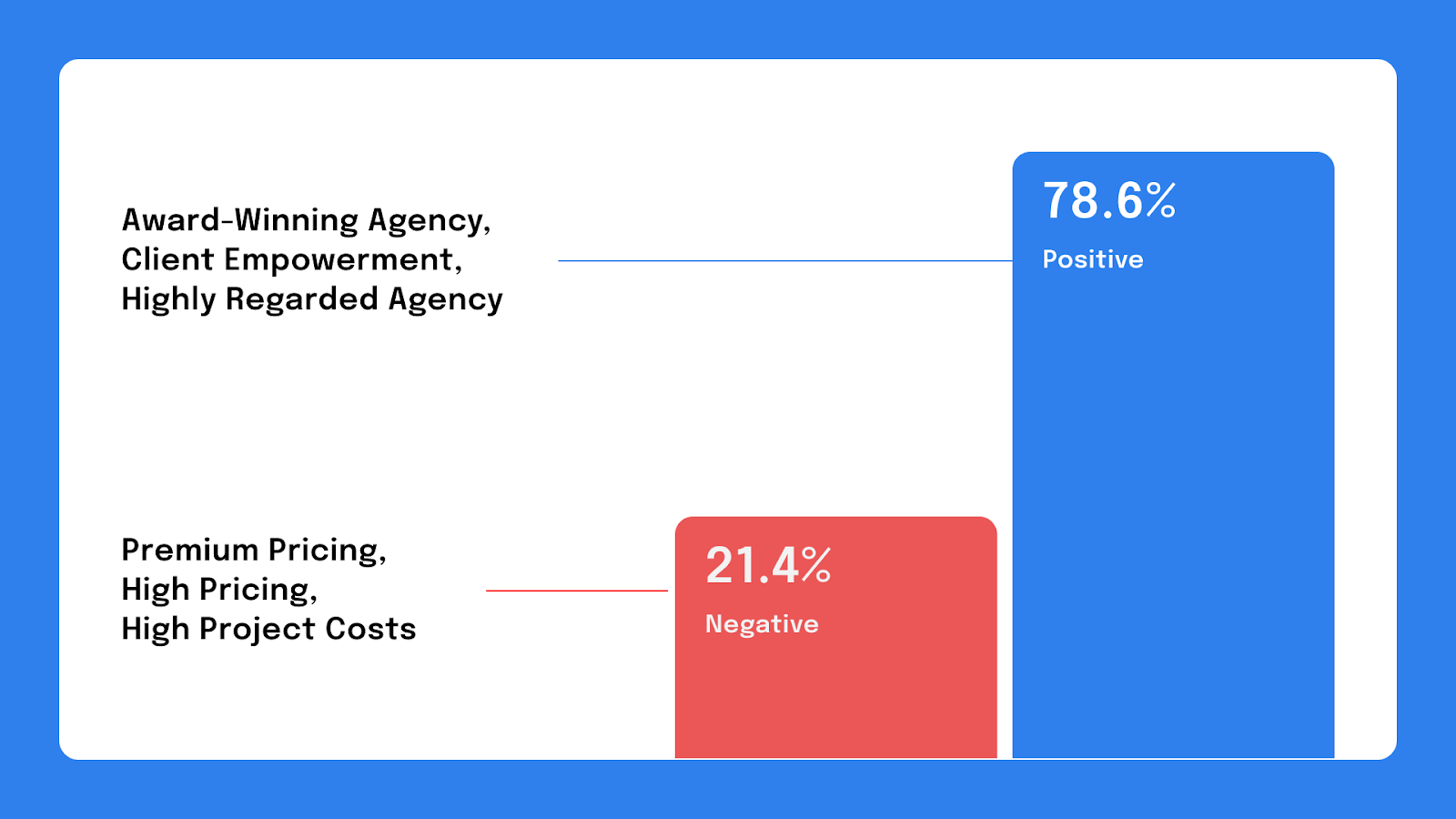
When looking at sentiment around Edgar Allan for Webflow website development, we can see that the majority of AI sentiment is positive, sitting at around 79%. The remaining 21% clusters around a single theme: premium pricing.
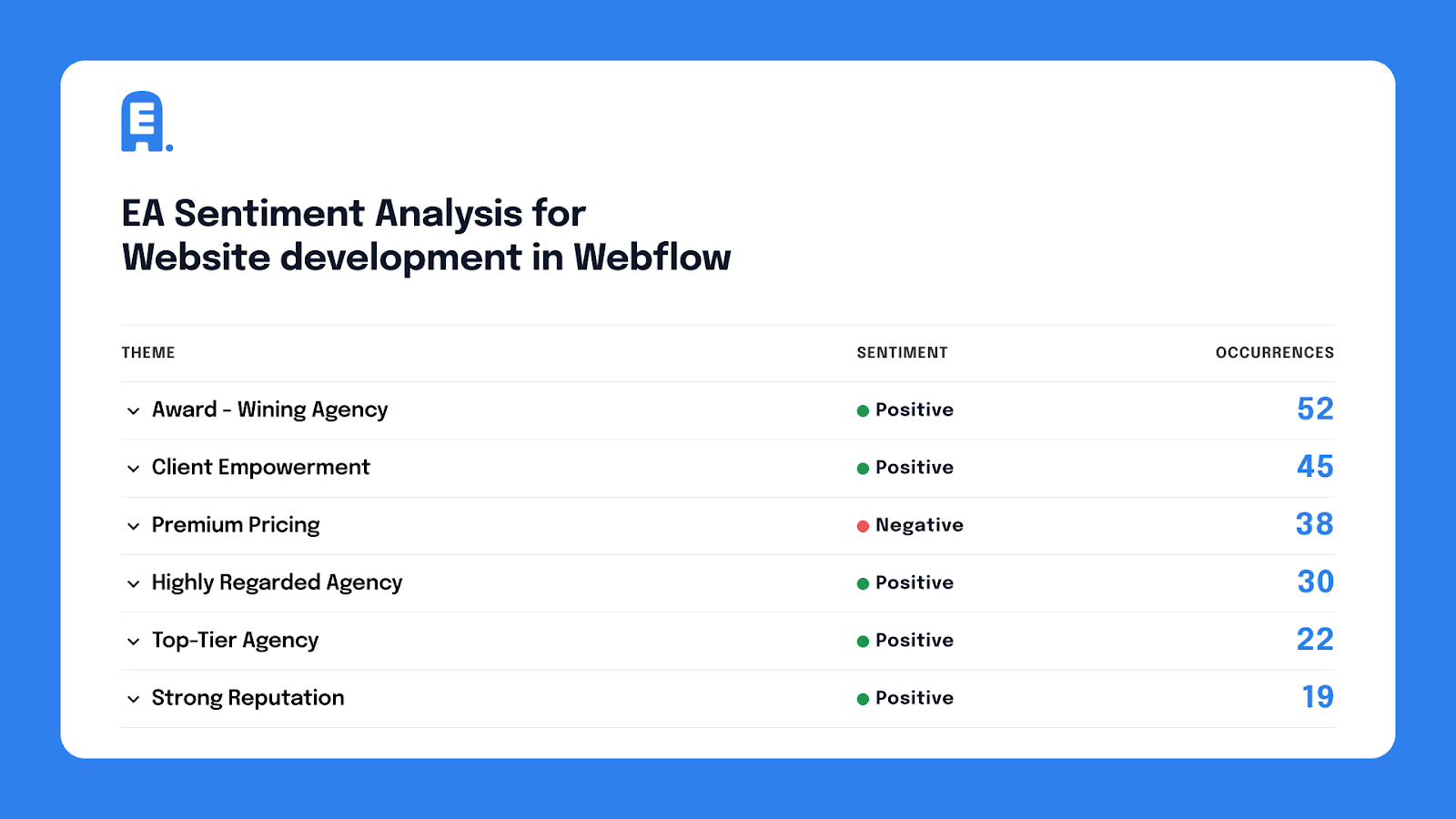
That insight matters. And, rather than trying to “correct” the perception, we use it to sharpen our positioning. Our revision reinforces that Edgar Allan is a premium partner, best suited for teams that value quality, clarity, and long-term scalability over lowest-cost execution.
In cases like this, sentiment analysis clarifies direction because sometimes, the right move is amplification, not correction.
Where sentiment comes from (and why citations matter)
AI-generated sentiment is rarely based on a single source. In most cases, perception is built from 50-200 citation sources, often including reputable platforms like PeerSpot, Gartner, TechRadar, and industry publications.
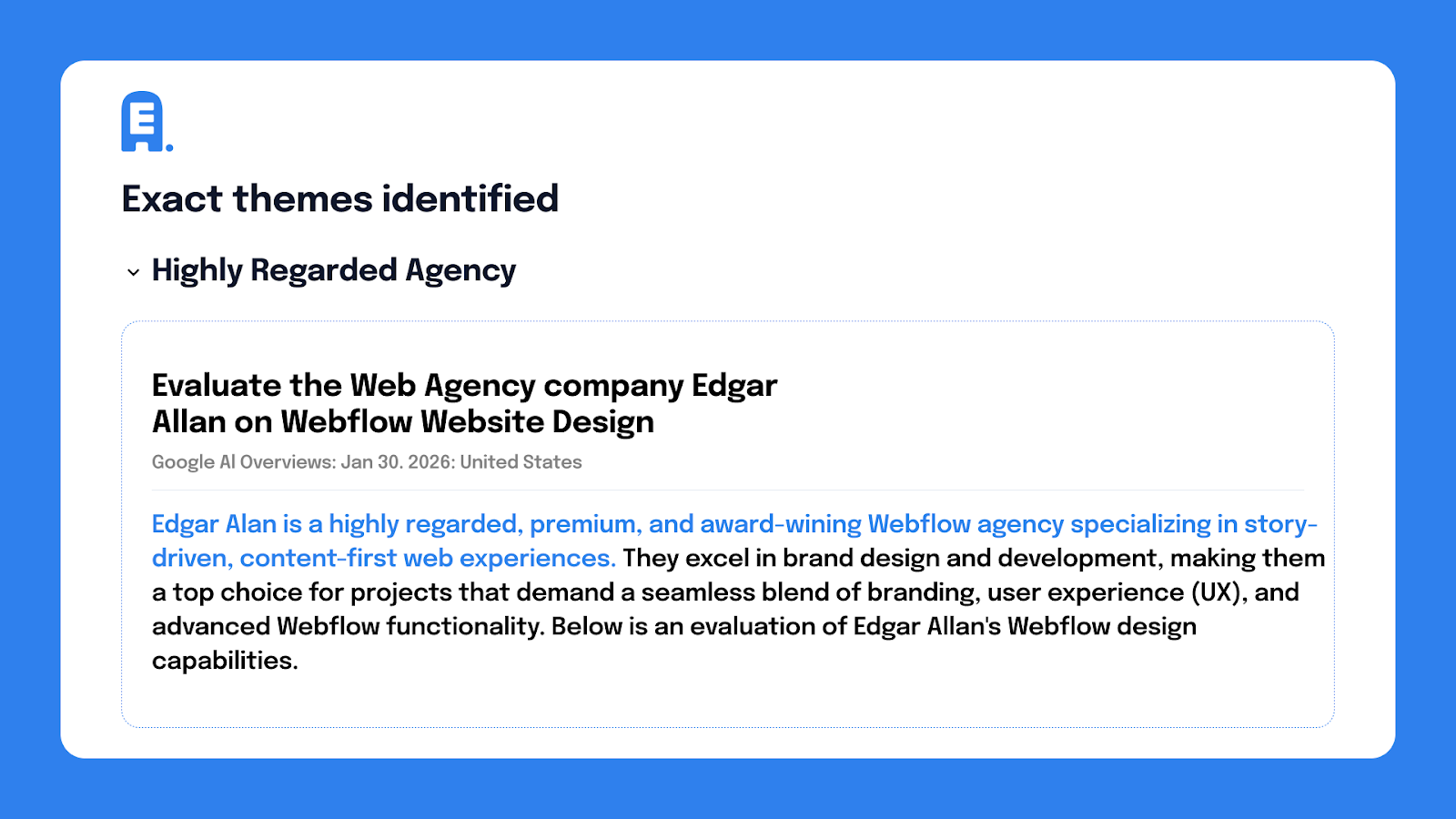
Understanding which sources are shaping sentiment allows us to:
- Identify the origins of negative narratives.
- Address factual inaccuracies.
- Prioritize partnerships and visibility in the places that matter most.
Why? Because tracing sentiment back to its source is as much about reputation architecture as it is about optimization.
Additional ways sentiment analysis supports growth
PR and reputation management
One negative story or review can outweigh several positive ones and negatively impact AI sentiment of a brand.
Leveraging Profound and other tools like it gives brands the opportunity to trace negative sentiment back to specific sources and address issues through fact-checking, updated content, or strategic PR instead of guesswork.
Beyond AEO, this helps brands invest in the right relationships and channels to build durable trust.
Product and service improvement
AI tools will often identify the same weaknesses over and over, usually tied to a specific feature, workflow, or usability issue.
But because sentiment analysis shows how those weaknesses are described, it gives product teams a clearer direction on where to focus improvements that directly impact perception and revenue.
This closes the loop between customer experience, product development, and go-to-market clarity.
Sales engineering
Many modern sales objections don’t originate in demos or sales calls anymore. They form earlier, often in the AI-generated summaries prospects read before they ever agree to talk to a human.
When sales teams know which objections are likely to appear and why, they can address them proactively, with confidence and credibility.
Being aware of what makes prospects uneasy already establishes authority. But being able to explain how those issues are being addressed is what converts interest into trust.
Why all of this matters for AEO
Sentiment analysis shows whether your brand is being understood, not just mentioned. And at the core of AEO, it’s the clearest way to see whether that interpretation is working.
At Edgar Allan, we treat AEO as the outcome of clarity across brand, experience, and systems, combined with visibility into how AI actually interprets what you’ve put out into the world. Our AI Discovery Health Check can give you a quick analysis of your brand's current standing.
If you want to understand how your brand is being represented in AI-generated answers, and what that means for marketing, sales, and growth, sentiment analysis is one of the clearest places to start. The goal isn’t manipulation. It’s clarity about how those answers are formed.
Our Answer Engine Optimization service helps you translate that clarity into structured action. If you would like to assess how your brand is currently being interpreted in AI search, contact us today.
Read more from the Edgar Allan Blog.
What sentiment analysis means in an AI-first world
Traditionally, sentiment analysis has been treated as a metric for brands to measure their reputation, using positive versus negative mentions, often tied to social listening or review platforms.
In an AEO context, however, sentiment analysis is better understood as perception analysis.
It measures the qualities, tradeoffs, and themes that AI tools surface when they describe, compare, or recommend a brand based on everything they can see about it online.
In other words, sentiment analysis shows you:
- How AI models understand your brand.
- Which attributes they emphasize?
- Where doubt, hesitation, or objection shows up.
This matters because users are now relying on tools like ChatGPT to evaluate options, compare vendors, and pressure-test decisions before ever setting foot on a brand’s website. Within search engines, users rely on Gemini and AI overviews about a topic or brand to do the same thing.
But the language those tools use to help users form their own opinions doesn’t come from nowhere. It’s synthesized from hundreds of online sources and weighted by trust, consistency, and clarity.
That synthesis is what users ultimately trust. Sentiment is the signal that reveals whether your brand is working hard for you or quietly working against you.
Why sentiment analysis (and a brand with a clear POV) are AEO foundations and not nice-to-haves
Successful AEO hinges on interpretation. Being mentioned is easy. Being understood correctly is harder.
When AI systems generate responses, they’re not ranking pages like we’ve become accustomed to. They’re constructing narratives about brands that include all kinds of information, like implied strengths, weaknesses, and positioning. Sentiment analysis collects the positives, which, if your position and unique POV are strong, should read like a list of reasons to believe in your brand.
Sentiment analysis also reveals where those narratives are unclear or drifting, however, which is especially important in the middle of the buyer’s journey, when prospects are asking questions like:
- Are this company’s products or services expensive?
- Is this brand reliable?
- Is this the right fit for me?
That’s a cue to disambiguate or directly combat an untruth about your company. Why? If negative sentiment shows up repeatedly around a theme, that theme becomes an objection, whether your site ever mentions it or not.
Control the narrative, don't just join it.
Understanding how LLMs characterize your brand is the first step toward a functional AEO strategy. If you're ready to see how your brand maps out, let’s start a conversation.
How Edgar Allan uses Profound for sentiment analysis
Profound works by running sentiment-focused prompts through AI, the same kinds of evaluative questions real prospects ask.
Using these prompts and themes, we can see:
- Which appear most frequently.
- Whether they are framed positively or negatively.
- Which sources are being cited to support them
Positive sentiment is generally treated as a confirmation signal. The real work begins with negative sentiment, because those themes tend to escalate.
Left unaddressed, they harden into objections that surface in sales conversations or quietly simmer, removing a brand from consideration altogether. Check out how you can fix the issue of misrepresentation of your brand in answer engines with this guide.
A real example: Edgar Allan’s own sentiment profile
We’ve used the same analysis on ourselves as we would for any brand we work with.
When looking at sentiment around Edgar Allan for Webflow website development, we can see that the majority of AI sentiment is positive, sitting at around 79%. The remaining 21% clusters around a single theme: premium pricing.
That insight matters. And, rather than trying to “correct” the perception, we use it to sharpen our positioning. Our revision reinforces that Edgar Allan is a premium partner, best suited for teams that value quality, clarity, and long-term scalability over lowest-cost execution.
In cases like this, sentiment analysis clarifies direction because sometimes, the right move is amplification, not correction.
Where sentiment comes from (and why citations matter)
AI-generated sentiment is rarely based on a single source. In most cases, perception is built from 50-200 citation sources, often including reputable platforms like PeerSpot, Gartner, TechRadar, and industry publications.
Understanding which sources are shaping sentiment allows us to:
- Identify the origins of negative narratives.
- Address factual inaccuracies.
- Prioritize partnerships and visibility in the places that matter most.
Why? Because tracing sentiment back to its source is as much about reputation architecture as it is about optimization.
Additional ways sentiment analysis supports growth
PR and reputation management
One negative story or review can outweigh several positive ones and negatively impact AI sentiment of a brand.
Leveraging Profound and other tools like it gives brands the opportunity to trace negative sentiment back to specific sources and address issues through fact-checking, updated content, or strategic PR instead of guesswork.
Beyond AEO, this helps brands invest in the right relationships and channels to build durable trust.
Product and service improvement
AI tools will often identify the same weaknesses over and over, usually tied to a specific feature, workflow, or usability issue.
But because sentiment analysis shows how those weaknesses are described, it gives product teams a clearer direction on where to focus improvements that directly impact perception and revenue.
This closes the loop between customer experience, product development, and go-to-market clarity.
Sales engineering
Many modern sales objections don’t originate in demos or sales calls anymore. They form earlier, often in the AI-generated summaries prospects read before they ever agree to talk to a human.
When sales teams know which objections are likely to appear and why, they can address them proactively, with confidence and credibility.
Being aware of what makes prospects uneasy already establishes authority. But being able to explain how those issues are being addressed is what converts interest into trust.
Why all of this matters for AEO
Sentiment analysis shows whether your brand is being understood, not just mentioned. And at the core of AEO, it’s the clearest way to see whether that interpretation is working.
At Edgar Allan, we treat AEO as the outcome of clarity across brand, experience, and systems, combined with visibility into how AI actually interprets what you’ve put out into the world. Our AI Discovery Health Check can give you a quick analysis of your brand's current standing.
If you want to understand how your brand is being represented in AI-generated answers, and what that means for marketing, sales, and growth, sentiment analysis is one of the clearest places to start. The goal isn’t manipulation. It’s clarity about how those answers are formed.
Our Answer Engine Optimization service helps you translate that clarity into structured action. If you would like to assess how your brand is currently being interpreted in AI search, contact us today.
Read more from the Edgar Allan Blog.